Welcome to our free classical music site

Do you write about classical music? Are you a blogger? Want to team up with Classical Connect? Send us a message, let's talk!
Do you write about classical music? Are you a blogger? Want to team up with Classical Connect? Send us a message, let's talk!




This Week in Classical Music: November 10, 2025. Andalusia and catching up. So, who and what did we miss while traveling in Andalusia? It seems that the previous two weeks were rather lean. Niccolo Paganini, considered the greatest violinist of the 19th century, was born on October 27th of 1782, but he wasn’t a great composer (though some of his tunes were wonderful). Carl Ditters von Dittersdorf, born in Vienna on November 2nd of 1739, composed in the Classical style, was friends with all the greats of the era, Gluck first, then Haydn and Mozart, and was an excellent violinist (he wrote 18 violin concertos and premiered them all). He also composed several comic operas, Der Apotheker und der Doktor being the most popular. Even though he wrote 120 symphonies, very few are performed these days: his music is mostly forgotten, and, we think, for a good reason: it’s pretty dull. You can try one of his recorded symphonies here. It’s nice, but the best thing about it is the title, Les paysans changés en grenouilles: The peasants turned into frogs (it’s one of Dittersdorf’s so-called Ovid Symphonies). The Prague Chamber Orchestra is conducted by Bohumil Gregor.
Samuel Scheidt was born on November 3rd of 1587. Together with his friends, Heinrich Schütz and Johann Hermann Schein, he was one of the most important German composers of the early 16th century. You can read more about him here. And finally, Vincenzo Bellini; he was born on November 3rd of 1801. We mentioned him recently when we wrote about the great soprano Giuditta Pasta.
This week is more substantial, with François Couperin le Grand, Alexander Borodin, Aaron Copland, and Paul Hindemith. We’d like to present an excerpt from Hindemith’s Ludus Tonalis, composed in 1942. Ludus Tonalis (Tonal game in Latin) is a set of twelve fugues, interspersed by eleven Interludes; the set starts with a Praeludium and ends with a Postludium, which is a retrograde inversion of the Praeludium. “Retrograde” means playing a set from the end to the beginning, but in “Retrograde inversion,” the original set is “inverted” first, meaning that each interval is turned upside down: the second up becomes the second down, the fifth down becomes the fifth up. Somehow, in the music of Schoenberg or, in this case, Hindemith, it works. While clearly, Hindemith had Bach in mind, there are only 12 fugues, not 24: in Hindemith’s approach to atonality, there’s no major or minor. The excerpt we’ll hear is from the live recording made by Sviatoslav Richter in France, during the Fêtes musicales de Touraine festival in 1985. The festival takes place every year in a wonderful 13th-century fortified barn called La Grange de Meslay just outside of the city of Tours. The excerpt starts with the 3rd Interludium followed by Fugue 4, and then another three pairs of Interludium and Fugue, here.
But what about classical music in Andalusia? Unfortunately, we cannot report anything exciting; there’s a dearth of it. Seville is the capital and the largest city of Andalusia, and that’s where you can hear some classical music in concert. Teatro de la Maestranza is where it takes place; the theater also presents opera, ballet, musicals, and even old movies, such as Ernst Lubitsch’s Carmen with Pola Negri in the title role, with the Real Orquesta Sinfónica de Sevilla playing the recorded soundtrack. The orchestra, resident at the theater, was founded in 1990. Some events are interesting, such as the staging of Purcell’s The Fairy Queen by Les Arts Florissants or Cecilia Bartoli in Gluck’s Orfeo ed Euridice. Martha Argerich may come…
What we did like a lot, and found gripping and fascinating, was Flamenco, but that’s a different story.Permalink
This Week in Classical Music: November 3, 2025. Andalusia, part II. Classical Connect is still in Andalusia. In Spain, classical music seems to be concentrated in Barcelona, the capital of Catalonia. Alicia de Larrocha, Spain’s most famous pianist, was born and lived all her life there. Pablo Casals, one of the greatest cellists of the 20th century, was also born in Catalonia, and, while still in Spain (he left the country after the Spanish Civil War), lived in Barcelona. He moved to France and then to Puerto Rico, where he died at the age of 96. Montserrat Caballé, La Superba, was a Barcelonesa, and so was another great soprano, Victoria de Los Ángeles. And yes, José Carreras was also born in Barcelona. Only Plácido Domingo was born in Madrid.
When we return, we’ll report on the classical music events (or the lack thereof) in Andalusia.Permalink
This Week in Classical Music: October 27, 2025. Andalusia. Classical Connect is in Andalusia! This part of Spain is famous for flamenco, but it was ruled by the Muslims for many centuries (all of Moorish Spain was called al-Andalus), and it developed a unique form called Andalusi classical music. Many Jews lived in the Muslim-ruled part of Spain, and they also developed their own musical tradition, Sephardic music. We’ll explore it upon our return.Permalink
This Week in Classical Music: October 20, 2025. Giuditta Pasta. This week has many significant anniversaries: Franz Liszt, Charles Ives, Georges Bizet, and Domenico Scarlatti.jpg "Giuditta Pasta as Anne Boleyn (Brulloff)") were all born this week. So were three composers of the 20th century, Luciano Berio, Malcolm Arnold, and Ned Rorem. Georg Solti, a renowned conductor, was born this week, and so was Giuditta Pasta, a celebrated Italian soprano. We’ve written about many of these composers and Solti, but never about Pasta. Sometimes, listening to the incredibly difficult bel canto roles in the operas of Rossini, Donizetti, or Bellini, we puzzle, who did they write these roles for, who were these amazing singers capable of pulling it off? Giuditta Pasta was one of them.
were all born this week. So were three composers of the 20th century, Luciano Berio, Malcolm Arnold, and Ned Rorem. Georg Solti, a renowned conductor, was born this week, and so was Giuditta Pasta, a celebrated Italian soprano. We’ve written about many of these composers and Solti, but never about Pasta. Sometimes, listening to the incredibly difficult bel canto roles in the operas of Rossini, Donizetti, or Bellini, we puzzle, who did they write these roles for, who were these amazing singers capable of pulling it off? Giuditta Pasta was one of them.
Pasta was born Giuditta Negri on October 26th of 1797, into a Jewish family. The Negri lived in Saronno, near Milan, and she studied in the city. In 1816, she married Giuseppe Pasta, a fellow singer, and took his name. By 1818, she had sung in all the main Italian opera houses; in 1821, she triumphed in Paris, singing the role of Desdemona in Rossini’s Otello. She then sang the main roles in the Paris premiere of Rossini’s Tancredi, a mezzo role, and Elisabetta in his Elisabetta, regina d'Inghilterra, a soprano role. That made Pasta Rossini’s favorite singer, and in the following decade, she became acknowledged as the greatest soprano of the time. She sang in London, in Paris, Milan, and Naples’s San Carlo, creating leading roles in the operas of Rossini, Meyerbeer, and Paisiello. In 1830, she sang the first Bellini role, that of Imogene in Il Pirata. One year later, Bellini wrote La sonnambula with Giuditta Pasta in mind. She sang Amina, a soprano sfogato role, with the diapason stretching from the mezzo to coloratura soprano registers. There were few soprano sfogato singers in the 19th century (the great Maria Malibran was one), and not many more in the 20th century, the best – and best known – being Maria Callas. Also in 1831, in La Scala, Pasta premiered what is possibly the ultimate bel canto role, Norma.
The third bel canto composer, Gaetano Donizetti, also created a role for Pasta in Anna Bolena. Past sang the role of Anna at the premiere in Milan in 1830, apparently to overwhelming success. Two years later, Donizetti wrote another opera for Pasta, Ugo, conte di Parigi.
Giuditta Pasta retired in 1835, just 38 years of age. She taught singing later in her life and died at the age of 67. Obviously, we don’t have the aural record of her singing, but we do have the recordings made by the “Giuditta Pasta of the 20th century,” Maria Callas. Here are the final moments of La sonnambula, the arias Ah, non credea mirarti and Ah! non giunge. In this 1957 recording, Callas is accompanied by the orchestra and chorus of La Scala, Antonio Votto conducting. If Giuditta Pasta was really as good, then we’d understand all the accolades she received from her admirers, from the regular operagoers to the French writer Stendhal, a friend and admirer, who saw her dozens of times and heaped praise in many of his writings. Permalink
This Week in Classical Music: October 13, 2025. Power, Marenzio, Galuppi. We’ve never written about Leonel Power, the English composer of the early 15th century. He was a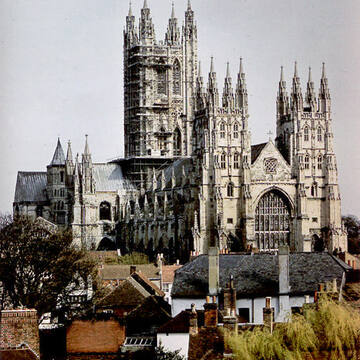 contemporary of John Dunstaple, and it was the two of them who produced Contenance Angloise, the English manner, a distinct style of polyphony. Contenance Angloise was influential at the Burgundian courts, then the most important musical center in Europe. We should confess that the music of Power and Dunstaple is the earliest that we can really enjoy. What has been reconstructed of the writing of Léonin and Pérotin, two composers of the Notre-Dame School who worked at the end of the 12th – early 13th centuries, sounds to us rather foreign, almost “mathematical,” created for the eye, not the ear. Even the music of Guillaume de Machaut (and we should write about him, too), as interesting as it is, is difficult to enjoy. It’s what the poet Martin Le Franc called the “sweet harmonies” of the English manner that makes the music of Power and Dunstaple so much more approachable for the modern ear.
We know little about Power’s life, which is not surprising considering the era; musicologists cannot even determine the decade he was born in: guesses range from 1370 to 1385. From contemporary documents, we know that he served as an instructor of choristers in the household chapel of Thomas, Duke of Clarence (Thomas died in 1421). In 1423, he was admitted to the fraternity of Christ Church, Canterbury (we know it as the Canterbury Cathedral). Later, he served as the choirmaster of the cathedral. In the cathedral’s documents, he was called by an honorific, Esquire. The date of his death is documented as June 5th of 1445. Here’s a motet Ibo michi ad montem (I will go to the mountain). It is performed by the Hilliard Ensemble.
Two other composers of the past were also born this week, Luca Marenzio and Baldassare Galuppi. Marenzio, one of the most important madrigalists of the late Renaissance, was born on October 18th, the question being whether in 1553 or 1554. The Marenzios, a poor family, lived in Lombardy in a small town near Brescia. Luca was probably educated at the Brescia Cathedral. In 1568, he went to Mantua, where he served at the court of the Gonzagas. After moving to Rome, Marenzio served, for about 10 years, at the court of Cardinal Luigi d'Este. He later went to Florence and worked at the court of Ferdinando I de' Medici. His madrigals became known across Italy and in Europe. Here, from 1580, is one of them, Dolorosi martir. Concerto Italiano is led by Rinaldo Alessandrini.
Baldassare Galuppi was also born on October 18th, 1706, on the island of Burano, near Venice. A popular composer, he traveled widely, visiting London and St. Petersburg. You can read more about him here. Galuppi wrote more than 100 operas, many to the librettos of Metastasio and the playwright Carlo Goldoni. Here’s an aria from Galuppi’s opera La diavolessa. The mezzo Kremena Dilcheva is supported by the Lautten Compagney orchestra under the direction of Wolfgang Katschner.Permalink
This Week in Classical Music: October 6, 2025. Miscellanea. Giuseppe Verdi was born on October 9th of 1813, in Le Roncole, a village between Piacenza and Parma, a part of Italy that at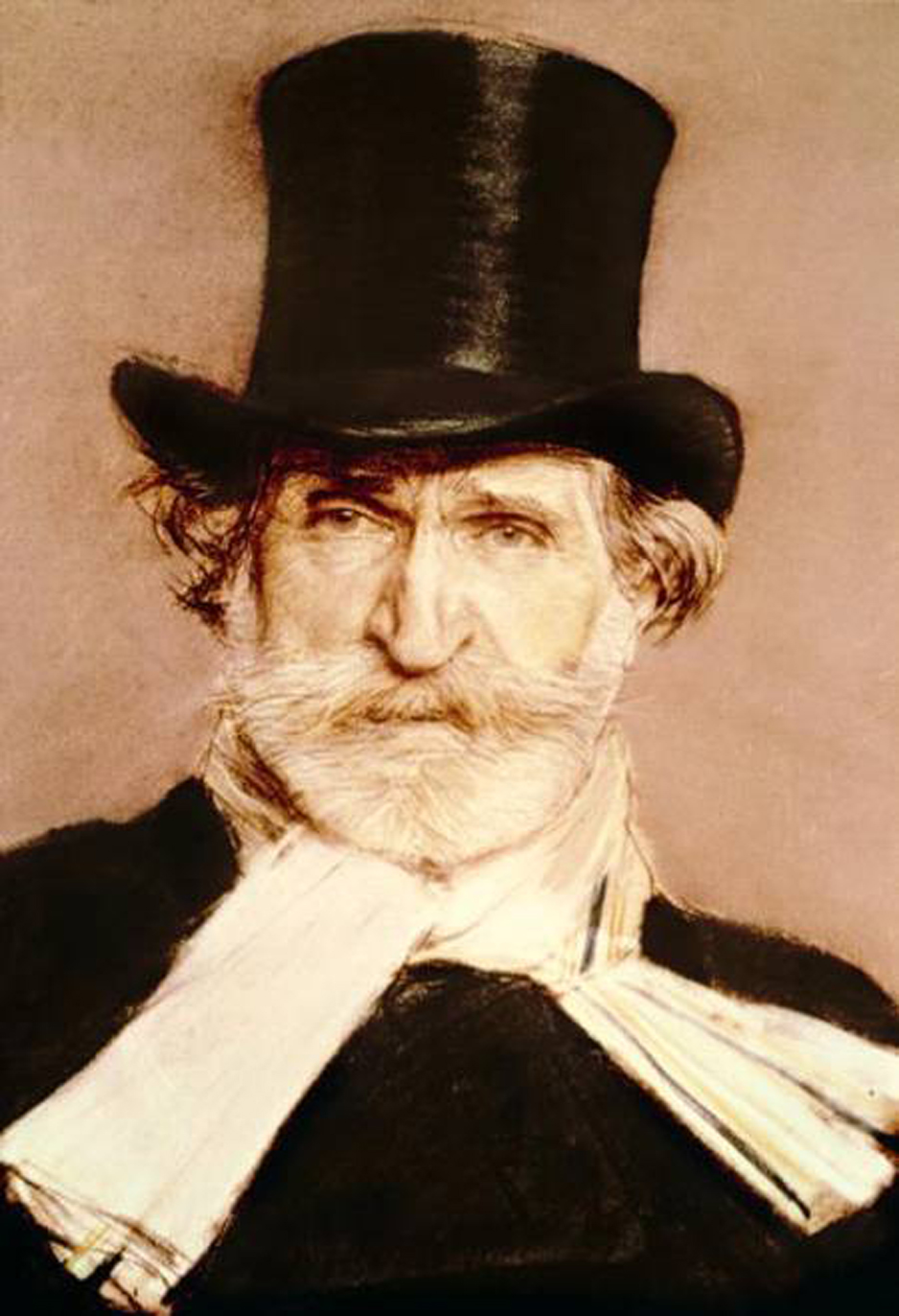 the time belonged to Napoleon’s French Empire. Today, it’s known as Roncole Verdi. Giuseppe, as we well know, went on to become one of the greatest opera composers ever and Italy’s national hero. We talked about Verdi’s music when we celebrated his 200th anniversary here, so this week we’ll discuss another important aspect of his life, his politics. Some episodes have been mythologized. For example, the famous chorus Va, Pensiero, from Nabucco, when written in 1842, was not intended as a nationalistic hymn, but has become one since then: it was proposed as the national anthem of Italy several times and has been adopted as the official song by one of the Italian parties. Nonetheless, from the late 1840s on, Verdi was very active in the Risorgimento (literally, resurgence, the unification movement). He was friends with Giuseppe Mazzini, one of the key figures in the unification movement, and even wrote a patriotic hymn on Mazzini’s request. His 1848 opera La battaglia di Legnano, with its opening chorus, Viva Italia, was greeted with enormous enthusiasm. Even the popular slogan Viva Verdi was used as an acronym for Viva Vittorio Emanuele Re D'Italia, Vittorio Emanuele being the King of Piedmont-Sardinia and future king of the unified Italy, Vittorio Emanuele II. In 1859, Verdi openly entered politics, getting elected to a provincial council. He then headed a group that met with the king in Turin and later with Count Cavour, then the Prime Minister of the Kingdom of Sardinia and one of the key people of the Risorgimento. It was Cavour who persuaded Verdi to continue on as a politician and become a member of the Piedmont-Sardinia Parliament, though Verdi resigned soon after Cavour’s death in 1861, less than three months after Vittorio Emanuele II declared the Kingdom of Italy (and made Cavour the Prime Minister of the unified country). Here’s Va Pensiero with James Levine conducting the Metropolitan Opera orchestra and chorus.
Heinrich Schütz, the greatest German composer before Bach, was born on October 8th of 1585. He studied in Venice with Giovanni Gabrieli and brought Italian music back to Germany, which, of course, doesn’t diminish his originality and talent. We have a detailed entry on Heinrich Schütz here.
Camille Saint-Saëns was also born this week, on October 9th of 1835, in Paris. Not one of our favorites, he deserves a separate entry, which we promise to write. We’re even less in love with Ralph Vaughan Williams, very popular in England. Williams was born on October 12th of 1872.
Three pianists were born this week: the Swiss Edwin Fischer, in Basel on October 6th of 1886, the wonderful Shura Cherkassky, an American pianist of Russian-Jewish descent, in Odessa, the Russian Empire, now Odesa, Ukraine, on October 7th of 1909. Cherkassky performed till the end of his life; he died at the age of 86. And then there’s another Russian-Jewish pianist, Evgeny Kissin, who was born on October 10th of 1971. In 2024, for his support of Ukraine in its fight against the Russian aggression, Kissin was declared a “foreign agent” by the insane and malignant Russian government. Kissin lives in Prague and is a British and Israeli citizen. In addition to playing the piano, he writes poetry and music. Permalink